
You are here
Feed aggregator
Mit Unterwasserdrohne: Ukraine setzt russisches U-Boot «praktisch» ausser Gefecht
Der ukrainische Geheimdienst SBU meldet einen Angriff auf ein russisches U-Boot der Schwarzmeerflotte. Das Boot vom Typ Warschawjanka wurde mit einer Unterwasserdrohne beschädigt.
Categories: Határon túli magyar portálok összesített hírei, Swiss News
Basler Rabbi kannte zwei Terror-Opfer von Sydney: «Unser jüdisches Leben und unsere Identität werden niemals verstummen»
Zwei Terroristen richteten am Bondi Beach in Sydney ein Blutbad an. Sie schossen auf eine jüdische Gemeinde. Ein Schock für den Basler Rabbi Zalman Wishedski, der mehrere Opfer persönlich kannte.
Categories: Határon túli magyar portálok összesített hírei, Swiss News
Konny und Manu Reimann: «Goodbye Deutschland»-Stars brechen ihr Schweigen zu Betrugsvorwürfen
Konny und Manu Reimann wollen nach Barbados ziehen. Doch vor der Reise werden sie plötzlich von ihren Fans stark kritisiert, es werden Betrugsvorwürfe laut. Jetzt äussert sich das Kult-Paar dazu.
Categories: Határon túli magyar portálok összesített hírei, Swiss News
Bund soll zuwarten: Ständerat will beim Alkohol noch keine strengeren Empfehlungen
Der Ständerat fordert vom Bundesrat einen Marschhalt bei neuen Empfehlungen zu mässigem Alkoholkonsum. Die Landesregierung soll weitere wissenschaftliche Erkenntnisse abwarten, statt die Forderungen der Weltgesundheitsorganisation anzunehmen.
Categories: Határon túli magyar portálok összesített hírei, Swiss News
Brussels’ power grid power grab falls flat
Key ministers absent at first discussion of EU ‘grids package’
Categories: European Union, Swiss News
'Bandits' kidnap worshippers during church service in Nigeria
At least 13 people are missing after armed men stormed a church, an official tells the BBC.
Categories: Africa, Swiss News
Erfolg für SP-Funiciello: Nationalrat segnet Frauenschutz-Million nun doch ab
Zuerst wollte der Nationalrat kein zusätzliches Geld zur Bekämpfung von Gewalt gegen Frauen sprechen. Massive öffentliche Proteste und eine Unterschriftenkampagne brachten die Wende.
Categories: Határon túli magyar portálok összesített hírei, Swiss News
Media advisory - General Affairs Council of 16 December 2025
Main agenda items, approximate timing, public sessions and press opportunities.
Categories: European Union, Swiss News
Media advisory - Environment Council of 16 December 2025
Main agenda items, approximate timing, public sessions and press opportunities.
Categories: European Union, Swiss News
Media advisory - General Affairs Council of 16 December 2025
Main agenda items, approximate timing, public sessions and press opportunities.
Categories: Europäische Union, Swiss News
Media advisory - Environment Council of 16 December 2025
Main agenda items, approximate timing, public sessions and press opportunities.
Categories: Europäische Union, Swiss News
Media advisory - General Affairs Council of 16 December 2025
Main agenda items, approximate timing, public sessions and press opportunities.
Categories: Európai Unió : hírek magyarul, Swiss News
Media advisory - Environment Council of 16 December 2025
Main agenda items, approximate timing, public sessions and press opportunities.
Categories: Európai Unió : hírek magyarul, Swiss News
Le CHIC inaugure son service de restauration
Le Centre Hospitalier International de Calavi (CHIC) franchit un nouveau cap dans la qualité de prise en charge de ses patients et de son personnel. Cette semaine, les équipes de SERVAIR ont intégré les cuisines de l'établissement, marquant le démarrage officiel de la restauration collective.
Bonne nouvelle pour les patients et personnels du Centre Hospitalier International de Calavi. La restauration dans cet établissement est désormais opérationnelle. Elle sera assurée par les équipes de SERVAIR.
Ce projet s'inscrit dans une vision globale du bien-être des patients, en associant sécurité alimentaire, qualité nutritionnelle et plaisir gustatif. Les menus proposés sont élaborés par un chef, et privilégient des produits locaux valorisant ainsi la richesse de la cuisine béninoise.
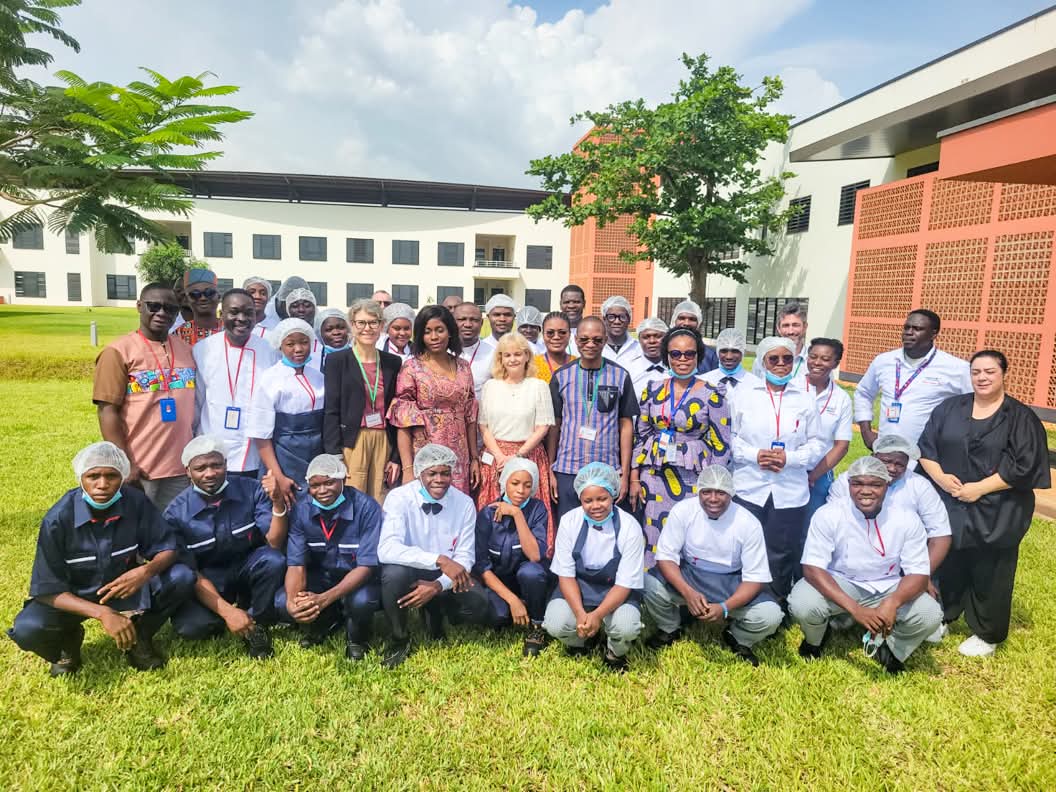
« Le repas n'est pas un simple service. Il est pensé comme un véritable moment de plaisir et de réconfort pleinement intégré au parcours de soins et au séjour hospitalier », souligne la direction du CHIC. Avec ce lancement, le CHIC confirme sa volonté d'offrir à ses patients et à son personnel une bonne expérience hospitalière.
A.A.A
Categories: Afrique, Swiss News
Décès du promoteur de l'université privée Houdégbé
Le Professeur et ancien député Octave Cossi Houdégbé est passé de vie à trépas. L'annonce a été faite ce lundi 15 décembre 2025.
Décès de l'homme politique béninois Octave Cossi Houdégbé. L'ancien député et promoteur de l'université privée Houdégbé North American University of Benin (HNAUB) est décédé à l'âge de 80 ans. Le défunt a occupé plusieurs postes en République centrafricaine sous le président André Kolingba à partir de 1981. Il a été chargé de mission du Président de la République ; Secrétaire d'Etat du Président de la République, Chargé des Affaires Financières et Economiques ; Président du Conseil d'Administration des Lignes Centrafricaines et ministre Résident de la NANA-MEMBERE. Il a aussi occupé les postes de Secrétaire d'Etat du Président de la République ; délégué au Ministère de l'Energie, des Mines et de l'Hydraulique et ministre Conseiller du Président de la République, Chargé des Dossiers de l'Economie et Finances, avec rang et Prérogatives de Ministre d'Etat. Octave Cossi Houdégbé est aussi le président fondateur de Houdégbé North American University au Ghana.
Il a été élu député à l'Assemblée nationale du Bénin, 7e et 8e législature. Marié et père de plusieurs enfants, Octave Houdégbé porte aussi le titre de Sa Majesté Dada Awignan Médjèmadokokpon. Il a reçu plusieurs distinctions honorifiques telles que Commandeur de l'ordre des Palmes Académiques ; Commandeur de l'Ordre du Mérite Centrafricain ; Grand Officier, Cordon Rouge de l'Etoile Brillante de Chine et Docteur Honoris Causa (HNAUB).
Les condoléances au domicile du défunt au quartier Akpakpa CENSAD débutent le 29 décembre 2025.
A.A.A
Categories: Afrique
Über 100 Stunden Arbeit futsch: Deutscher vergibt Weltrekord kurz vor Ziel
Es ist nur ein Moment der Unachtsamkeit – und über 100 Stunden Arbeit des 49-jährigen Benjamin Klapper sind in Sekunden zerstört. Kurz vor dem Ziel scheitert der Deutsche beim Versuch einen Bierdeckel-Weltrekord aufzustellen.
Categories: Swiss News
Parliament’s long defence of human rights: the Sakharov Prize
Written by Clare Ferguson with Sara Raja.
One of the European Parliament’s most important priorities is to ensure all EU policy promotes respect for people’s fundamental freedoms and human rights. Parliament has therefore awarded its Sakharov Prize to individuals and organisations making a remarkable effort to protect human rights and fundamental freedoms since 1988. Previous laureates include Nelson Mandela, Alexei Navalny and Malala Yousafzai.
This year, the Parliament awards its Sakharov Prize to individuals who show great personal courage in defending these freedoms and rights: Andrzej Poczobut of Belarus and Mzia Amaglobeli of Georgia, journalists who have fought for democracy in their respective countries. Both have been imprisoned for standing up for freedom of expression and democratic values. The Sakharov Prize award ceremony takes place during Parliament’s December plenary session.
The award is named in honour of Andrei Sakharov, the eminent Soviet nuclear physicist, dissident, human rights advocate and recipient of the 1975 Nobel Peace Prize. Indeed, several of the laureates have gone on to win the Nobel Peace Prize –including María Corina Machado, Denis Mukwege and Nadia Murad.
Parliament’s political groups and individual Members (at least 40) nominate the candidates at a joint meeting of the Foreign Affairs Committee, the Development Committee and the Human Rights Subcommittee each September. The Parliament publishes a shortlist of three candidates in October and the Conference of Presidents selects the winner. Parliament then awards the prize at a plenary session at the end of the year. The prize confers an endowment of €50 000 on the winner, and the Sakharov network supports laureates in their efforts to defend their cause. When awarding the Prize, Parliament, through the voice of its President, usually calls for jailed laureates’ release from prison. Parliament also uses all the means in its parliamentary diplomacy toolbox to protect laureates from state repression and to keep human rights defenders’ struggle in the spotlight.
The Sakharov Prize therefore has a long history, featuring many distinguished names in the struggle to protect human rights and freedoms for all. Since 2014, the European Parliamentary Research Service produces a paper on the laureates of each prize, the human rights situation and the Parliament’s position. These papers are available in several EU languages:
A concerning deterioration in the human rights situation In Venezuela and election irregularities under the Maduro regime led to María Corina Machado, leader of Venezuela’s democratic forces, and President-elect Edmundo González Urrutia winning the 2024 Sakharov Prize. The second time the prize has been awarded to Venezuela’s democratic opposition activists (the first time was in 2017), they represent all Venezuelans both inside and outside the country who are fighting to restore freedom and democracy.
In 2023, following the murder of Jina Mahsa Amini’s by Iran’s security forces for her refusal to wear a hijab, and repression of women’s rights protesters in Iran, Parliament awarded the 2023 Sakharov Prize to Jina Mahsa Amini and the Woman, Life, Freedom Movement in Iran in support of the protesters’ aspirations for a free, stable, inclusive and democratic country.
The brave people of Ukraine have fought hard and sacrificed a great deal to protect their country from Russia’s aggression. A number of individuals and organisations were awarded the 2022 Sakharov Prize in recognition of their resistance to Russian attack.
Political repression was already intensifying in Russia in 2021. To honour his courageous defence of human rights and democratic freedoms despite severe personal risk and his imprisonment for his anti‑corruption activism and criticism of the Kremlin, Parliament awarded the 2021 Sakharov Prize to opposition leader Alexey Navalny. Parliament strongly condemned Navalny’s murder in 2024 and underlined that the Russian Government and Vladimir Putin should personally bear criminal and political responsibility for the death of their most prominent opponent.
Following contested presidential election in Belarus and a severe crackdown on peaceful protests, Parliament awarded the 2020 Sakharov Prize to the democratic opposition in Belarus, represented by the Coordination Council, in tribute to their courage and determination to resist repression and advance democratic freedoms.
In 2019, in response to escalating repression against Uyghur minorities and civil society activists in China, the Parliament awarded the 2019 Sakharov Prize to Uyghur economics professor Ilham Tohti, in recognition of his advocacy for ethnic minority rights and peaceful dialogue. Tohti remains in prison in China, serving a life sentence.
Parliament awarded the 2018 Sakharov Prize to Ukrainian filmmaker Oleg Sentsov, imprisoned on politically motivated charges against the backdrop of Russia’s annexation of Crimea. Parliament aimed to spotlight Sentsov’s plight and underscore broader concerns about political prisoners and human‑rights abuses in Russian‑controlled territories.
Amid a severe erosion of democratic institutions and repression of political freedoms in Venezuela, the European Parliament awarded the 2017 Sakharov Prize to the Democratic Opposition in Venezuela, notably the National Assembly and political prisoners, in support of their struggle for democratic transition, human rights and respect for fundamental freedoms.
The 2016 Sakharov Prize was awarded to Nadia Murad Basee Taha and Lamiya Aji Bashar to highlight the fate of their people, the Yazidis, one of the communities most affected, in proportion to their total population, by the violence committed by ISIL/Da’esh (or ‘Islamic State’), particularly during the conflict in Syria.
Saudi Arabian blogger, Raif Badawi was awarded the 2015 Sakharov Prize following his arrest and sentence to 10 years in prison, 1 000 lashes and a hefty fine for insulting Islam (his site hosted material criticising senior religious figures and a Saudi university). In his writings, Badawi advocates liberal Islam, freedom of thought and expression, and separation of state and religion.
Europe’s top human rights prize was awarded in 2014 to Dr Denis Mukwege, a gynaecologist from the Democratic Republic of Congo (DRC) in recognition for his perseverance and courage in his efforts to help rape survivors. A fervent advocate of women’s rights, Dr Mukwege has received many international awards, but has also been the target of death threats, and even a 2012 assassination attempt.
More information on the Sakharov Prize and the laureates:- 30 Years of the Sakharov Prize: The European Parliament upholding freedom of thought
- Sakharov’s legacy on the centenary of his birth
- Laureates of the 2025 Sakharov Prize: Andrzej Poczobut and Mzia Amaglobeli, journalists fighting for democracy in Belarus and Georgia
- Sakharov Prize laureates in difficulty: Facing repression for defending human rights
- Laureates of the 2024 Sakharov Prize: María Corina Machado and Edmundo González Urrutia, fighting for democracy in Venezuela
- 2023 Sakharov Prize laureate: Jina Mahsa Amini and the Woman, Life, Freedom Movement in Iran
- 2022 Sakharov Prize laureate: The brave people of Ukraine
- 2021 Sakharov Prize laureate: Alexey Navalny
- 2020 Sakharov Prize laureate: The democratic opposition in Belarus
- 2019 Sakharov Prize laureate: Ilham Tohti
- Oleg Sentsov: The 2018 Sakharov Prize laureate
- The 2017 Sakharov Prize
- The Yazidis: An ongoing genocide
- The 2015 Sakharov Prize
- Sakharov Prize 2014: Tending the scars of sexual violence in DRCEuropean Parliament Sakharov Prize
Categories: European Union, Swiss News
Wegen prorussischer Propaganda: Ex-Oberst der Schweizer Armee auf EU-Sanktionsliste
Die EU hat einen ehemaligen Oberst der Schweizer Armee auf ihre Sanktionsliste genommen. Der 70-jährige Schweizer soll Verschwörungstheorien verbreitet und als Sprachrohr für prorussische Propaganda gedient haben.
Categories: Swiss News
Personenunfall: Pendlerverkehr am Bahnhof Zürich-Stadelhofen lahmgelegt
Aktuell kommt es nach einem Unterbruch der Strecke im Bahnverkehr auf zwischen Dübendorf und Schwerzenbach ZH zu Störungen. Grund dafür ist ein Personenunfall. Es ist weiterhin mit Verspätungen und Ausfällen zu rechnen.
Categories: Swiss News
Weber’s right-hand man poised for permanent €18,000-per-month job
Weber set to send spin doctor into permanent civil service role
Categories: Afrique, European Union
Pages
the old site is here


© 2012-2015 Europa Varietas Foundation © 2015-2020 Europa Varietas Association
www.europavarietas.org | info(@)europavarietas(dot)org | Switzerland
This is a GDPR ready site


We are looking for sponsors for the English translation of these books, please contact turkeandras(at)gmail(dot)com