
You are here
Feed aggregator
Žilinka szerint kártékony a Btk. újabb módosítása
Maroš Žilinka legfőbb ügyész szerint kártékony a Btk. új módosítása, és az államfőnek fontolóra kell vennie, hogy újratárgyalásra visszaküldi a parlamentbe.
Fussgänger und Autos: Dieses kleine Handzeichen im Alltag verrät viel über dich und deinen Charakter
Winkst du zum Dank, wenn ein Auto stoppt, um dich über den Fussgängerstreifen zu lassen?
Diese «habituelle Dankbarkeit» führt gemäss Studien zu mehr Lebenszufriedenheit und stabileren sozialen Beziehungen.
Categories: Afrique, Swiss News
New European body to decide on eventual Ukraine reparations
The International Claims Commission for Ukraine will assess and decide on claims for reparations, including any amount to be paid out
Categories: Africa, European Union
Twenty Years of Security Discourse: Why Context Still Matters
When biztonsagpolitika.hu was launched more than twenty years ago, security policy occupied a relatively limited space in Hungarian public discourse, confined mainly to academic and professional circles. Today, it has become unavoidable. War has returned to Europe, hybrid threats have blurred the boundary between peace and conflict, and information itself has emerged as a strategic domain. In this environment, the value of a security-policy platform is no longer measured by speed, but by its capacity to provide context. This is where biztonsagpolitika.hu has played — and continues to play — a distinct role.
Continuity in a volatile media environmentIn its early years, biztonsagpolitika.hu filled a structural gap. It offered independent, expert-driven analysis at a time when few Hungarian-language platforms treated security policy as an autonomous analytical field rather
Forrás: AI generált képthan a subsidiary of foreign affairs reporting. Over time, the site evolved into more than a publishing interface. Closely linked to the Security Policy College, it became the outward-facing expression of a professional community and a training ground for emerging analysts.
This continuity matters. While formats, technologies, and thematic emphases have changed, the platform has remained committed to analytical depth over performative commentary. In a media ecosystem increasingly shaped by immediacy and simplification, that choice has become a strategic asset rather than a liability.
The existence of the platform’s archived “old” site further underscores this continuity. Preserving earlier analyses in a dedicated archival format is not merely a technical solution, but a statement of intellectual responsibility. In security policy, where long-term patterns, past assumptions, and earlier assessments matter, such archives allow readers to trace how interpretations evolved over time—and how certain questions have remained remarkably persistent.
Depth as relevance, not resistanceThe past decade has rewarded acceleration. Algorithms favor reaction over reflection, and security debates are often compressed into binary narratives. Yet core strategic questions—deterrence, escalation management, resilience, technological dependence—resist such compression. They require historical awareness, comparative framing, and a willingness to accept ambiguity.
Biztonsagpolitika.hu represents a counter-model to real-time opinion cycles. Its relevance does not stem from competing with breaking news, but from slowing the conversation down. By prioritizing background analysis and longer-term patterns, the platform enables readers—researchers, practitioners, and students alike—to approach security not as a sequence of events, but as an interconnected system.
Adapting without dilutionDepth alone, however, does not guarantee sustained relevance. A platform built on rigorous analysis must also adapt to changing patterns of consumption. This does not require abandoning standards, but translating them. Structured briefings, visual explanations, podcasts, and selective international outreach can extend reach without compromising intellectual integrity.
The core challenge for the coming years is therefore not analytical quality, but visibility: how serious security analysis can remain present and influential in an attention-driven environment.
Why this still mattersTwo decades on, biztonsagpolitika.hu demonstrates that security policy is not merely about reacting to crises, but about interpreting long-term dynamics. In an era defined by strategic uncertainty and informational overload, platforms that privilege context over immediacy perform a quiet but essential public function.
The past twenty years have established credibility. The next twenty will test whether analytical depth can remain influential in a world increasingly resistant to it. If it can, biztonsagpolitika.hu will not merely endure—it will continue to shape how security is understood, debated, and taught in Hungary.
A Twenty Years of Security Discourse: Why Context Still Matters bejegyzés először Biztonságpolitika-én jelent meg.
Categories: Biztonságpolitika, Europäische Union
Massnahme für Waffenplatz Brugg: Warum sich Frösche über das neue Munitionsgebäude freuen
Die Naturschutzzone Auschachen in Brugg AG wird ökologisch aufgewertet, um den Bau eines neuen Munitionsmagazins auszugleichen. Eine Vereinbarung zwischen Kanton, Stadt und Armasuisse sichert militärische Nutzung und fördert Amphibienlebensräume.
Categories: Afrique, Swiss News
ÚVZ: Nőtt az influenzások és a légúti betegségekben szenvedők száma
Az előző héthez képest az év 50. hetében országosan 12,9 százalékkal nőtt az akut légúti megbetegedések száma. Az influenzások és influenzaszerű megbetegedésben szenvedők száma 52,9 százalékkal ugrott meg.
Unfall: Frau wird in Kaltbrunn SG von Auto angefahren und schwer verletzt
Eine 26-jährige Frau ist am Montag in Kaltbrunn von einem Auto angefahren und dabei schwer verletzt worden. Sie überquerte gemäss der Polizei die Strasse auf dem Fussgängerstreifen. Der Rettungsdienst brachte sie in ein Spital.
Categories: Afrique, Swiss News
Soldats nigérians détenus au Burkina Faso : Cinq options possibles pour leur libération
Les autorités de l'AES maintiennent en détention le personnel militaire nigérian, composé de neuf soldats et de deux aviateurs, tout en indiquant qu'elles poursuivent leur enquête avant d'entreprendre d'autres actions.
Categories: Afrique, European Union
Und noch mehr Lebensmittel: Italiener schmuggelt 66 Panettoni über Schweizer Grenze
An der Schweizer Grenze wurde ein Italiener mit über 100 kg unverzollter Lebensmittel aufgehalten. Der Mann muss nun eine Busse zahlen und wird wegen möglicher Verstösse gegen Transportvorschriften untersucht.
Categories: Afrique, Swiss News
Nati-Captain Wälti spricht über ihre Krankheit: «Sie wird meinen Alltag noch über Jahre einschränken»
Seit einiger Zeit hat Lia Wälti mit einem Abszess zu kämpfen. Nun spricht sie erstmals offen darüber und verrät, wie stark sie das Ganze in ihrem Alltag beeinflusst.
Categories: Afrique, Swiss News
Passeport algérien : voici le nouveau prix officiel pour la diaspora dès janvier 2026
C’est officiel : le passeport algérien délivré à l’étranger voit son prix chuter dès le 1er janvier 2026. Bonne nouvelle pour la diaspora algérienne ! […]
L’article Passeport algérien : voici le nouveau prix officiel pour la diaspora dès janvier 2026 est apparu en premier sur .
Categories: Afrique, Határon túli magyar portálok összesített hírei
Elektrischer Mini-SUV VW ID. Cross Concept: Mit ihm will VW zurück auf die Erfolgsspur
VW bereitet mit der Studie des ID. Cross seinen neuen kompakten E-Crossover vor, der eine ganze Familie umschliesst. Der elektrische Nachfolger des T-Cross wird im Frühjahr 2026 offiziell vorgestellt und soll neue Kunden in die Elektrowelt locken – auch über den Preis.
Categories: Afrique, Swiss News
Plan d'urgence à l'hôpital Mohammed V pour la prise en charge des blessés
Un plan d'urgence a été activé à l'hôpital Mohammed V de Safi pour l'accueil des blessés, à la suite des pluies orageuses exceptionnelles qui se sont abattues sur la province, dimanche 14 décembre 2025.
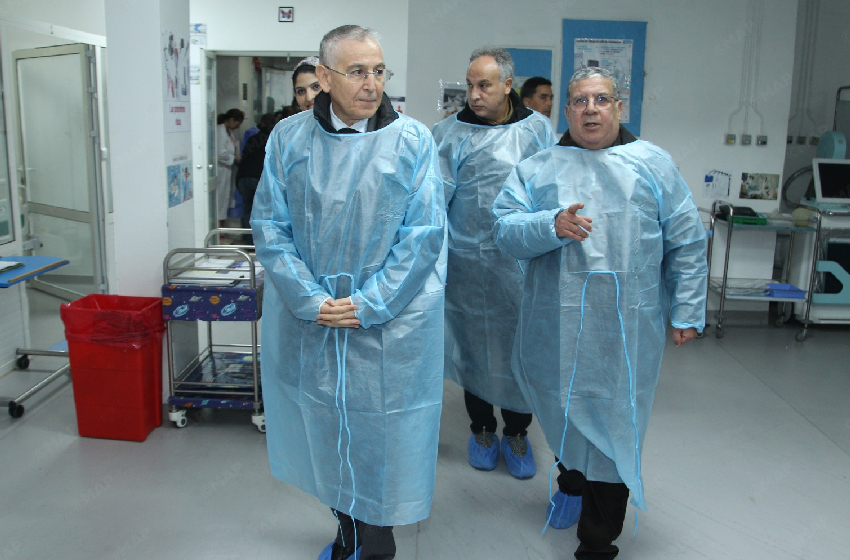
Le directeur de l'hôpital Mohammed V de Safi a expliqué dans une déclaration à la presse, que le plan d'urgence comprend la mobilisation de personnels médical et administratif, ainsi que la mise à disposition des ressources humaines et logistiques nécessaires. Khalid Iazza a précisé que l'établissement a mobilisé 50 lits dédiés à ces cas, avec la possibilité d'élargir la capacité d'accueil à d'autres services en cas de besoin. Tous les équipements nécessaires sont disponibles, a-t-il affirmé. Il s'agit d'un scanner, des appareils de radiologie, d'échographie et d'analyses médicales, des couvertures et autres moyens logistiques.
Pour renforcer le plan d'urgence, du personnel complémentaire a été rappelé dont cinq médecins du service des urgences, deux médecins anesthésistes, un médecin en chirurgie orthopédique et un médecin en neurochirurgie.
Les services des urgences ont accueilli dimanche, une soixantaine de blessés, dont deux admis en réanimation. Selon M. Iazza, 18 autres blessés souffrant d'une hypothermie sévère ont été hospitalisés et leur état de santé est stable.
Aux dernières nouvelles, de nombreux blessés qui ont recouvré la santé ont regagné leurs domiciles. Cinq autres poursuivent leur traitement, en plus de deux patients en réanimation dont l'état est stable et qui devraient quitter le service dans les prochaines heures.
La situation est sous contrôle grâce à l'état de préparation et à la mobilisation de l'hôpital, ce qui a permis de fournir toutes les formes de soins de santé nécessaires aux patients, a conclu M. Iazza.
Categories: Afrique, European Union
Das sind eure die Spieler der Runde 17: St.-Gallen-Star sticht Sion-Held aus
Die 17. Runde der Super League war eine für die Torhüter. Die Suche nach dem besten Akteur des Wochenendes wurde zum Duell zwischen Lawrence Ati Zigi und Anthony Racioppi.
Categories: Afrique, Swiss News
Wenn der Schnee im Flachland fehlt: Fünf Ausflugstipps in den Bergen für magische Weihnachtstage
Wer über die Weihnachtstage raus will, findet in den Bergen das passende Programm – von Bewegung bis Besinnlichkeit. Blick stellt fünf Events in den Bergen vor, die für Festlaune sorgen.
Categories: Afrique, Swiss News
Alles begann an der Weihnachtsfeier: Das Protokoll des schaurigen Reiner-Mordes
Es kommen immer mehr Details zum Mord an Rob Reiner und seiner Ehefrau ans Licht. Blick gibt dir eine Übersicht darüber, was zur grausamen Tat in Los Angeles bisher bekannt ist.
Categories: Afrique, Swiss News
Krank, alleinerziehend, Bürokratieopfer: Armut hat viele Gesichter – jetzt reden fünf Betroffene
Wer in Armut lebt, findet in der Politik kaum Gehör. Das soll sich ab 2026 ändern – mit einem «Rat für Armutsfragen». Wir haben Menschen gefragt, die von der Stiftung SOS Beobachter unterstützt wurden: Wo würden sie den Hebel ansetzen?
Categories: Afrique, Swiss News
Zu Besuch in Nova Scotia: Die Küste der 1000 versunkenen Geheimnisse
Die Ostküste Kanadas birgt unzählige Mythen und Millionenschätze. Eine Reise durch spektakuläre Landschaften, zu verbotenen Inseln und der unglaublichen Geschichte, wie ein einst verachtetes Tier zum wichtigsten Exportgut wurde.
Categories: Afrique, Swiss News
China locks in five-year tariffs on EU pork, softening initial duties
Duties are lower than those in the provisional decision of last September
Categories: European Union
Zwei Frauen erstochen: Zürcher «Parkhausmörderin» erhält Therapie statt Verwahrung
Das Zürcher Obergericht hat entschieden: Die Verwahrung der «Parkhausmörderin» wird in eine stationäre Massnahme umgewandelt.
Categories: Afrique, Swiss News
Pages
the old site is here


© 2012-2015 Europa Varietas Foundation © 2015-2020 Europa Varietas Association
www.europavarietas.org | info(@)europavarietas(dot)org | Switzerland
This is a GDPR ready site


We are looking for sponsors for the English translation of these books, please contact turkeandras(at)gmail(dot)com