
You are here
Feed aggregator
AMENDMENTS 190 - 416 - Draft report Recommendation for the Council, the Commission and the Vice-President of the Commission / High Representative of the Union for Foreign Affairs and Security Policy on EU-China political relations - PE779.788v01-00
AMENDMENTS 190 - 416 - Draft report Recommendation for the Council, the Commission and the Vice-President of the Commission / High Representative of the Union for Foreign Affairs and Security Policy on EU-China political relations
Committee on Foreign Affairs
Hilde Vautmans
Source : © European Union, 2025 - EP
Committee on Foreign Affairs
Hilde Vautmans
Source : © European Union, 2025 - EP
Categories: Europäische Union, Swiss News
Exportation : 28 000 tonnes de ce produit à 200 USD/t en route vers les USA
Le Port de Annaba (EPAn) est une fois de plus sous les feux des projecteurs avec une opération d’exportation d’envergure. Actuellement, les quais voient le […]
L’article Exportation : 28 000 tonnes de ce produit à 200 USD/t en route vers les USA est apparu en premier sur .
Categories: Afrique, Európai Unió : hírek magyarul
La Chine lance la déclaration d'entrée en ligne pour les étrangers
Les voyageurs étrangers peuvent désormais remplir leur carte d'entrée avant d'arriver en Chine, selon une annonce des autorités.
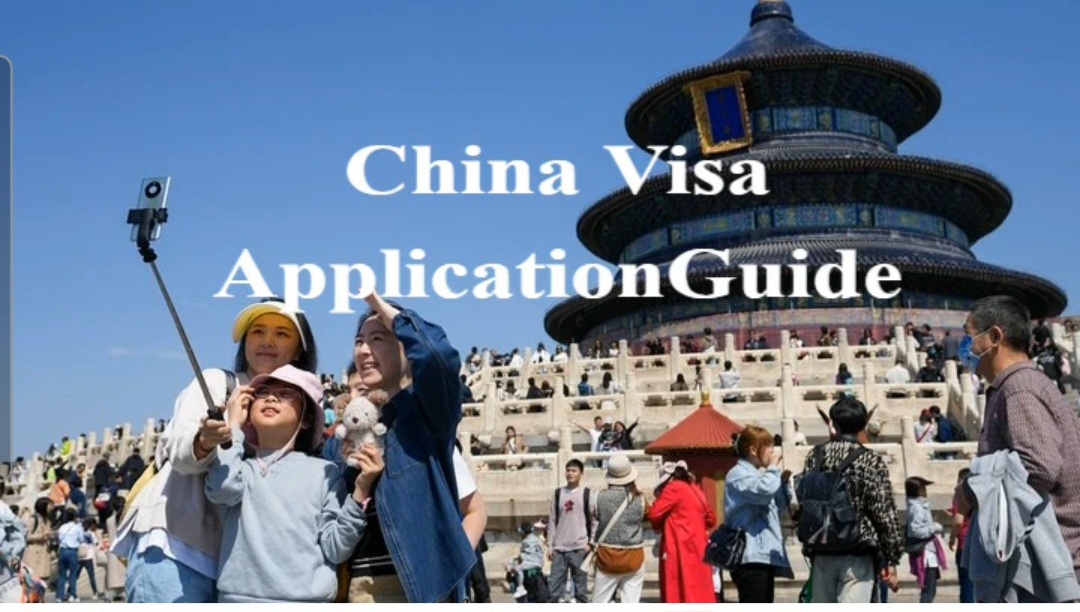
Les voyageurs étrangers se rendant en Chine pourront saisir leurs informations personnelles et de voyage avant leur arrivée dans le pays, via plusieurs canaux numériques : le site web et la plateforme administrative de l'organisme, une application mobile dédiée, ainsi qu'un mini-programme disponible sur WeChat et Alipay. Un code QR, affiché sur la carte d'entrée, permettra également d'accéder directement au formulaire en ligne.
L'annonce a été faite par l'Administration nationale de l'immigration (ANI).
Pour les personnes ne disposant pas des moyens techniques nécessaires, la Chine assure qu'il sera toujours possible de compléter la déclaration à l'arrivée, en scannant un code QR au poste-frontière, en utilisant les équipements intelligents installés sur place ou, si besoin, en remplissant une carte d'entrée papier.
Les autorités précisent que sept catégories d'étrangers seront exemptées de cette démarche. Cela inclut les titulaires d'une carte de résident permanent étranger en Chine ; les détenteurs d'un permis de voyage pour la Chine continentale réservé aux résidents de Hong Kong et Macao (non ressortissants chinois) ; les voyageurs munis d'un visa de groupe ou bénéficiant d'une exemption de visa de groupe ; les passagers en transit direct de moins de 24 heures ; les visiteurs débarquant puis rembarquant sur un navire de croisière ; les usagers des voies rapides ; ainsi que les membres d'équipage étrangers à bord de moyens de transport franchissant les frontières chinoises.
Avec ce dispositif numérique, la Chine entend moderniser le passage aux frontières et réduire les délais de contrôle, dans un contexte de reprise progressive des mobilités internationales.
M. M.
Categories: Afrique
L’hydrogène, le rêve de l’UE qui a englouti 20 milliards d’euros pour peu de résultats
L’UE est loin d’atteindre les objectifs ambitieux qu’elle s’était fixés en matière de production d’hydrogène, ce vecteur énergétique longtemps présenté comme clé pour la transition climatique, mais qui reste coûteux malgré les milliards d’euros de subventions, alerte l’Agence de coopération des régulateurs de l’énergie (ACER).
The post L’hydrogène, le rêve de l’UE qui a englouti 20 milliards d’euros pour peu de résultats appeared first on Euractiv FR.
Categories: Swiss News, Union européenne
AADL 3 : le DG dévoile les prix des logements et les nouveautés attendues
Le directeur général de l’Agence nationale pour l’amélioration et du développement du logement (AADL), Riyadh Qamdhani, a apporté une précision attendue par des centaines de […]
L’article AADL 3 : le DG dévoile les prix des logements et les nouveautés attendues est apparu en premier sur .
Categories: Afrique, Európai Unió : hírek magyarul
Coran profané et objets arrachés : enquête ouverte après l’attaque d’une mosquée en France
La mosquée Ar-Rahma du Puy-en-Velay en France a été victime de vandalisme dimanche après-midi, avec notamment la dégradation du Coran, des livres jetés à terre […]
L’article Coran profané et objets arrachés : enquête ouverte après l’attaque d’une mosquée en France est apparu en premier sur .
Categories: Afrique, Union européenne
EU Parliament summons Spanish minister over alleged obstruction in ‘narco-boat’ probe
Civil Guard associations say the state has failed to provide adequate resources for units combating transnational drug networks
Categories: Afrique, European Union
Betrugsverdacht: Ehemalige EU-Chefdiplomatin Mogherini festgenommen
Belgische Ermittler durchsuchten wegen des Verdachts der Zweckentfremdung von EU-Geldern den EU-Diplomatischen Dienst, das College of Europe und mehrere Privatwohnungen.
Categories: Afrique, Europäische Union
Mitigating anti-microbial resistance in the environment: a One Health governance analysis in Kenya
Antimicrobial resistance (AMR) poses a critical threat to global health, with environmental transmission pathways – pharmaceutical waste, wastewater effluents, agricultural runoff – increasingly recognised as significant yet inadequately governed. Despite international calls for One Health approaches integrating human, animal and environmental sectors, coordination across these domains remains weak, particularly for environmental dimensions. This paper examines why environmental integration lags in Kenya’s AMR governance, despite sophisticated formal architecture that includes national and county coordination platforms (NASIC, CASICs), tech-
nical working groups and the One Health AMR Surveillance System (OHAMRS). We investigate two research questions: (i) What are the enablers and barriers to effective governance of interlinkages among human health, animal health and environmental sectors in mitigating AMR? (ii) What are the options for effectively integrating the environmental dimension into AMR governance?
Drawing on polycentric governance theory, the Institutional Analysis and Development (IAD) framework and the concept of Networks of Adjacent Action Situations (NAAS), we analyse how authority, information and resources shape interactions among overlapping decision centres across constitutional, collective-choice and operational levels. Through 12 semi-structured interviews with government officials, fisheries officers and environmental regulators, supplemented by policy document analysis, we map six action situations spanning planning, resource allocation, surveillance, stewardship, wastewater treatment and regulation. Findings reveal that constitutional-choice rules create formal overlaps intended to foster coordination, yet systematic asymmetries in authority, information and resources perpetuate the marginalisation of environmental issues. Boundary and position rules concentrate agenda setting in health sectors; information rules exclude AMR parameters from environmental permits and inspections; payoff rules reward clinical outputs while environmental investments compete with higher priorities; and scope rules omit environmental accountability targets. These rule configurations attenuate feedback loops between environmental action situations and upstream planning, maintaining system stability but at sub-optimal performance for One Health objectives. We identify rule-focused interventions – mandating environmental representation with voting authority, embedding AMR parameters in regulatory instruments, institutionalising joint inspection protocols, ring-fencing environmental budgets, and establishing explicit environmental targets – that would realign coordination toward genuine environmental integration.
Morris Buliva is an independent researcher based in Nairobi, and Governance and Partnerships Consultant for the Fleming Fund Country Grant in Kenya.
Categories: Diplomacy & Defense Think Tank News, Swiss News
Mitigating anti-microbial resistance in the environment: a One Health governance analysis in Kenya
Antimicrobial resistance (AMR) poses a critical threat to global health, with environmental transmission pathways – pharmaceutical waste, wastewater effluents, agricultural runoff – increasingly recognised as significant yet inadequately governed. Despite international calls for One Health approaches integrating human, animal and environmental sectors, coordination across these domains remains weak, particularly for environmental dimensions. This paper examines why environmental integration lags in Kenya’s AMR governance, despite sophisticated formal architecture that includes national and county coordination platforms (NASIC, CASICs), tech-
nical working groups and the One Health AMR Surveillance System (OHAMRS). We investigate two research questions: (i) What are the enablers and barriers to effective governance of interlinkages among human health, animal health and environmental sectors in mitigating AMR? (ii) What are the options for effectively integrating the environmental dimension into AMR governance?
Drawing on polycentric governance theory, the Institutional Analysis and Development (IAD) framework and the concept of Networks of Adjacent Action Situations (NAAS), we analyse how authority, information and resources shape interactions among overlapping decision centres across constitutional, collective-choice and operational levels. Through 12 semi-structured interviews with government officials, fisheries officers and environmental regulators, supplemented by policy document analysis, we map six action situations spanning planning, resource allocation, surveillance, stewardship, wastewater treatment and regulation. Findings reveal that constitutional-choice rules create formal overlaps intended to foster coordination, yet systematic asymmetries in authority, information and resources perpetuate the marginalisation of environmental issues. Boundary and position rules concentrate agenda setting in health sectors; information rules exclude AMR parameters from environmental permits and inspections; payoff rules reward clinical outputs while environmental investments compete with higher priorities; and scope rules omit environmental accountability targets. These rule configurations attenuate feedback loops between environmental action situations and upstream planning, maintaining system stability but at sub-optimal performance for One Health objectives. We identify rule-focused interventions – mandating environmental representation with voting authority, embedding AMR parameters in regulatory instruments, institutionalising joint inspection protocols, ring-fencing environmental budgets, and establishing explicit environmental targets – that would realign coordination toward genuine environmental integration.
Morris Buliva is an independent researcher based in Nairobi, and Governance and Partnerships Consultant for the Fleming Fund Country Grant in Kenya.
Categories: Diplomacy & Defense Think Tank News, Swiss News
Mitigating anti-microbial resistance in the environment: a One Health governance analysis in Kenya
Antimicrobial resistance (AMR) poses a critical threat to global health, with environmental transmission pathways – pharmaceutical waste, wastewater effluents, agricultural runoff – increasingly recognised as significant yet inadequately governed. Despite international calls for One Health approaches integrating human, animal and environmental sectors, coordination across these domains remains weak, particularly for environmental dimensions. This paper examines why environmental integration lags in Kenya’s AMR governance, despite sophisticated formal architecture that includes national and county coordination platforms (NASIC, CASICs), tech-
nical working groups and the One Health AMR Surveillance System (OHAMRS). We investigate two research questions: (i) What are the enablers and barriers to effective governance of interlinkages among human health, animal health and environmental sectors in mitigating AMR? (ii) What are the options for effectively integrating the environmental dimension into AMR governance?
Drawing on polycentric governance theory, the Institutional Analysis and Development (IAD) framework and the concept of Networks of Adjacent Action Situations (NAAS), we analyse how authority, information and resources shape interactions among overlapping decision centres across constitutional, collective-choice and operational levels. Through 12 semi-structured interviews with government officials, fisheries officers and environmental regulators, supplemented by policy document analysis, we map six action situations spanning planning, resource allocation, surveillance, stewardship, wastewater treatment and regulation. Findings reveal that constitutional-choice rules create formal overlaps intended to foster coordination, yet systematic asymmetries in authority, information and resources perpetuate the marginalisation of environmental issues. Boundary and position rules concentrate agenda setting in health sectors; information rules exclude AMR parameters from environmental permits and inspections; payoff rules reward clinical outputs while environmental investments compete with higher priorities; and scope rules omit environmental accountability targets. These rule configurations attenuate feedback loops between environmental action situations and upstream planning, maintaining system stability but at sub-optimal performance for One Health objectives. We identify rule-focused interventions – mandating environmental representation with voting authority, embedding AMR parameters in regulatory instruments, institutionalising joint inspection protocols, ring-fencing environmental budgets, and establishing explicit environmental targets – that would realign coordination toward genuine environmental integration.
Morris Buliva is an independent researcher based in Nairobi, and Governance and Partnerships Consultant for the Fleming Fund Country Grant in Kenya.
Categories: Diplomacy & Defense Think Tank News, Swiss News
Surveillance de masse: Le Service de renseignement viole la Constitution
Le Tribunal administratif fédéral estime dans un arrêt que la surveillance transfrontalière des communications n’est pas conforme à la loi fondamentale.
Categories: Balkan News, Swiss News
Commission teases next food chain proposals
The report hints at measures to prevent below-cost selling
Categories: Afrique, European Union
BUDGET BRIEF: The first negotiating box
Own resources, European Competitiveness Fund, EU administration, Erasmus
Categories: Afrique, European Union
A conversation on Humane World for Animals’ vision of ending animal suffering with Ruud Tombrock
In this interview, Ruud Tombrock, Executive Director of Humane World for Animals Europe, outlines the organisation’s mission to build a world where animals are free from suffering. He introduces HWA’s work by highlighting the scale of intensive farming in Europe and the growing impact of global crises on animal welfare, offering a clear picture of […]
Categories: Afrique, European Union
EXCLUSIF : Perquisitions au service diplomatique de l’UE et au Collège d’Europe dans le cadre d’une enquête pour fraude
La police belge a perquisitionné les locaux du Service européen pour l’Action extérieure (SEAE) à Bruxelles, du Collège d’Europe à Bruges, ainsi que des domiciles privés ce mardi 2 décembre dans le cadre d’une enquête sur des soupçons d’utilisation abusive de fonds européens, selon des personnes proches de l’enquête et des témoins.
The post EXCLUSIF : Perquisitions au service diplomatique de l’UE et au Collège d’Europe dans le cadre d’une enquête pour fraude appeared first on Euractiv FR.
Categories: Swiss News, Union européenne
Spanish PM Sánchez seeks to repair ties with former separatist ally
Junts’ decision to “break relations” in October triggered a parliamentary blockade
Categories: Afrique, European Union
EU countries clinch fragile deal on drug shortages plan
Denmark’s health minister Sophie Løhde calls it an 'important step' for improving patients' access to medicines
Categories: Afrique, European Union
Former EEAS chief Mogherini, top Commission official arrested in fraud probe
Mogherini, and senior EU official Stefano Sannino are among the arrests
Categories: Afrique, European Union
Danish presidency proposes moving farm policy provisions to empower agricultural lawmakers
The apparently procedural initiative will grant more power to farm ministers and MEPs to shape the new CAP
Categories: Afrique, European Union
Pages
the old site is here


© 2012-2015 Europa Varietas Foundation © 2015-2020 Europa Varietas Association
www.europavarietas.org | info(@)europavarietas(dot)org | Switzerland
This is a GDPR ready site


We are looking for sponsors for the English translation of these books, please contact turkeandras(at)gmail(dot)com