
You are here
Feed aggregator
A magyar kormány meghackelte Magyar Péteréket? Módosult a Tisza jelöltállítási folyamata
Euronews: "A Tisza Világ applikációt az elindítása óta támadják nemzetközi hekkerek, akik mögött nyilvánvalóan az orosz szolgálatok állnak. Hogy miért teszik ezt? Mert egy céljuk van: a magyarok többségi akaratával szemben hatalomban tartani az ő érdekeiket kiszolgáló legfontosabb uniós szövetségesüket, Orbán Viktort" - írta vasárnap (11. 2.) Facebook-oldalán a legerősebb magyarországi ellenzéki párt vezetője annak kapcsán, hogy ismeretlenek kiszivárogtatták 200 ezer felhasználójuknak, szimpatizánsuknak az adatait.
VOLTAGE: Europe gets real on climate … just in time
In today's edition: Energy tax, COP30, rail lobby interview
Categories: Afrique, European Union
Feljelentést tett az SaS a puccsal kapcsolatos kijelentések miatt
Hétfőn feljelentést tett az SaS a főügyészségen a kormánypárti politikusok állítólag puccsra vonatkozó kijelentései miatt. Bírálják, hogy a kormány nem foglalkozik a növekvő bűnözéssel és a romló közbiztonsággal, de az állítólagos államcsíny miatt rendkívüli parlamenti ülést kezdeményezett.
Óriási parmezánrablás Olaszországban
Példátlan parmezánlopás történt az olaszországi Bologna tartományban, Castel D’Aiano városában. Ismeretlen elkövetők mintegy 200 darab, összesen több mint 100 ezer eurót érő Parmigiano Reggiano sajtot vittek el egy neves üzem raktárából – írja a Hirado.hu.
Erős szélre figyelmeztetnek a meteorológusok a Nyitrai járásban
Hétfő délután elsőfokú riasztást adtak ki a Nyitrai járásban az erős szél miatt. Szlovák Hidrometeorológiai Intézet (SHMÚ) figyelmeztetése előreláthatólag 17:00 óráig lesz érvényben. 65–85 km/órás széllökések is előfordulhatnak. (tasr) Kiemelt kép: TASR
Ungarischer Oppositionsführer sieht Cyberangriff hinter Datenleck
Péter Magyar warf Russland zudem vor, die Angriffe gesteuert zu haben, um Orbán an der Macht zu halten.
Categories: Europäische Union, Swiss News
''Je suis l'homme le plus chanceux au monde, mais je souffre aussi'', déclare le seul survivant du crash d'Air India
Viswashkumar Ramesh décrit la douleur et l'angoisse qu'il endure malgré avoir survécu à la catastrophe.
Categories: Afrique, Balkan News
''Je suis l'homme le plus chanceux au monde, mais je souffre aussi'', déclare le seul survivant du crash d'Air India
Viswashkumar Ramesh décrit la douleur et l'angoisse qu'il endure malgré avoir survécu à la catastrophe.
Categories: Afrique, Határon túli magyar portálok összesített hírei
Nouveaux vols vers l’Asie et le Moyen-Orient : Air Algérie étoffe son réseau
Air Algérie et Qatar Airways ont signé un accord de partage de codes (code-share). Il s’agit d’un partenariat stratégique qui permettra à la compagnie aérienne […]
L’article Nouveaux vols vers l’Asie et le Moyen-Orient : Air Algérie étoffe son réseau est apparu en premier sur .
Categories: Afrique, Balkans Occidentaux
L’Autriche va faire pression au Conseil pour retarder l’application des règles anti-déforestation
Cette semaine, l’Autriche va mener une campagne au Conseil pour repousser l’application des règles anti-déforestation de l’UE à la fin 2026, dans le but de gagner du temps et d’obtenir des modifications qui exempteraient la plupart des États membres du bloc du respect des règles.
The post L’Autriche va faire pression au Conseil pour retarder l’application des règles anti-déforestation appeared first on Euractiv FR.
Categories: Swiss News, Union européenne
France refers Shein to Paris prosecutor over sale of ‘child-like’ sex dolls
The Commission sent Shein info requests about illegal products, under the bloc's Digital Services Act, earlier this year but has so far not opened a formal probe
Categories: Afrique, European Union
Raw Materials for a Resilient Europe: The EU’s Strategic Partnership with the Western Balkans
The thematic report “Raw Materials for a Resilient Europe: The EU’s Strategic Partnership with the Western Balkans” is a result of ELIAMEP’s initiative think nea – New Narratives of EU Integration, supported by the Open Society Foundations – Western Balkans.
The initiative contributes to reimagining the EU’s engagement with the Western Balkans, as well as the region’s attractiveness for the EU in order to ensure a resilient EU integration strategy and ever-closer integration with a full membership perspective in mind.
This thematic report authored by Dr. Ana Krstinovska (Research Fellow, South-East Europe Programme, ELIAMEP & Senior Researcher, think nea – New Narratives of EU Integration) and Dr. André Wolf (Non-Resident Reseach Associate, think nea – New Narratives of EU Integration & Head of Division, CEP Berlin) examines the strategic potential of the Western Balkans in the context of the EU’s efforts to secure critical and strategic raw materials essential for its competitiveness, green transition, and defence readiness. It argues that the region which is geographically proximate, economically interlinked with the EU, and engaged in the accession process, represents a crucial yet underutilized partner in strengthening Europe’s strategic autonomy and industrial resilience.
EXECUTIVE SUMMARYThe EU’s Critical Raw Materials Act (CRMA), adopted in 2024, highlights the strategic importance of securing reliable and diversified access to critical and strategic raw materials
(CRMs/SRMs) essential for Europe’s competitiveness, green transition, and defence capabilities. As global supply chains are increasingly subject to geopolitical pressures, the Western Balkans offer a unique opportunity for the EU. The region is geographically close, economically intertwined with the EU, formally engaged in the accession process, and endowed with significant reserves of copper, aluminium (bauxite), nickel, antimony, lithium, and rare earth elements.
Despite this potential, the Western Balkan’s contribution to European raw materials security remains underdeveloped. A recurring pattern emerges across countries: raw ores and concentrates flow mostly to China, while processed or semi-processed goods are exported to the EU. Serbia exports most of its copper ores to China, while processed copper is split between the EU and Chinese buyers. Montenegro ships bauxite largely to China, but aluminium articles to the EU. Albania exports raw copper to China but processed copper to the EU. In North Macedonia, domestic processing of bauxite has relied heavily on Chinese inputs. This structure secures greater value for China in the global supply chain, while constraining the EU’s strategic autonomy.
At the same time, the Western Balkans capture limited economic value from their resources. Processing, recycling, and advanced technology investments remain underdeveloped. Outdated geological data, obsolete technologies, weak governance frameworks, and fragile investment climates further constrain efforts to move up the value chain. The lack of regional integration compounds these problems: national strategies often duplicate efforts rather than complement them, leading to inefficiency and missed economies of scale.
Mining and extraction are politically sensitive and socially contested across the region. The legacy of polluting industries, opaque privatization, and unresolved environmental “hotspots” has fuelled public distrust and citizen mobilization. Serbia’s Jadar lithium project, suspended in 2022 following widespread protests but recently revived, is emblematic of the risks of pursuing extractive partnerships without transparent governance and robust safeguards.
In Bosnia and Herzegovina, local opposition has slowed or blocked several projects in lithium and magnesium. In North Macedonia, civic mobilization successfully halted the Ilovica-Štuka gold-copper project. These cases underscore that raw material development is not only a technical or economic challenge; it also requires political legitimacy and social trust.
Weak rule of law and institutional capacity further aggravates these risks. Geological data often dates back to the 1970s–1980s, permitting processes are fragmented and slow, inspection services lack resources, and corruption remains pervasive. Governance deficiencies drive up costs for investors, fuel social opposition, and undermine the credibility of governments. Without visible guarantees that mining will meet the highest environmental, social, and governance (ESG) standards, even economically viable projects risk becoming politically toxic and socially unsustainable.
The Western Balkans’ raw materials potential should not be treated as isolated national resources, but instead as part of Europe’s broader industrial ecosystem. The EU has already launched instruments such as the Single Market Highway and the Reform and Growth Facility, and Western Balkan partners have access to Horizon Europe. These can serve as platforms for joint projects, standards alignment, and technology transfer. Embedding raw materials cooperation into the enlargement framework, including through Chapter 20 (Industrial Policy), Chapter 27 (Environment), and the Fundamentals cluster, can reinforce EU credibility while incentivizing reforms.
Regional cooperation is equally critical. Restoring value chains that once spanned the former Yugoslavia, covering exploration, smelting, refining, and processing, would generate economies of scale and reduce inefficiencies. EU-led processes such as the Berlin Process can serve as vehicles for fostering such cross-border integration. This report proposes five overarching policy priorities:
- Value-chain upgrading: Invest in processing, recycling, and innovation capacities so the region exports higher-value goods to the EU instead of raw ores to China. Prioritize aluminium and copper as pilot sectors.
- Embed partnerships in accession conditionality: Link EU financial support and market access to verifiable implementation of EU environmental, labour, and governance standards, ensuring public trust and the participation of affected communities.
- Strengthen governance capacity: Modernize geological surveys, streamline permitting systems, consolidate fragmented concessions, and enhance inspection and enforcement to guarantee compliance with ESG safeguards.
- Promote regional integration: Use the Single Market Highway and the Berlin Process to coordinate standards, infrastructure, and joint investments across the Western Balkans, restoring regional supply chains.
- Mobilize the European private sector: Deploy EU financial instruments and risk-sharing mechanisms to encourage the greater involvement of European firms, fostering joint ventures that combine EU technology and capital with local resources.
By pursuing this agenda, the EU can simultaneously strengthen its strategic autonomy and support sustainable economic development in the Western Balkans. For the region, the path forward lies not in exporting raw ores but in developing modern, EU-aligned value chains that create jobs, generate revenues, and build public trust. For the EU, engaging early and systematically is the best way to prevent critical assets from reinforcing the influence of rival powers, while accelerating the accession process and securing the raw materials needed for
Europe’s future. By aligning raw materials cooperation with the EU’s enlargement policy, the Union and the Western Balkans can transform shared resources into shared prosperity—building a sustainable, competitive, and strategically autonomous Europe that includes the Western Balkans as equal partners.
You can read the full report here.
Categories: Diplomacy & Defense Think Tank News, Europäische Union
Les automobilistes avertis : poursuites et amendes salées pour ceux qui gênent le tramway d’Alger
Un geste d’incivilité a semé la pagaille sur les rails du tramway d’Alger. Ce lundi matin, la société Société d’exploitation des tramways (Setram) a signalé […]
L’article Les automobilistes avertis : poursuites et amendes salées pour ceux qui gênent le tramway d’Alger est apparu en premier sur .
Categories: Afrique, European Union
Washington découvre l’Algérie : une semaine entière dédiée au tourisme national sur ABC7
C’est une excellente nouvelle pour la promotion du tourisme algérien : l’Ambassade d’Algérie aux États-Unis a annoncé le lancement d’une série documentaire spéciale consacrée aux […]
L’article Washington découvre l’Algérie : une semaine entière dédiée au tourisme national sur ABC7 est apparu en premier sur .
Categories: Afrique, European Union
Spain regional leader resigns, a year after deadly floods
"I know I made mistakes. I acknowledge them and I will live with them all my life," the leader said
Categories: European Union, Swiss News
Frantic diplomacy over 2040 target as EU climate law deadlines loom
Latest negotiating documents suggest further favours on offer to secure backing for 90% CO2 reduction target
Categories: European Union, Swiss News
Phase de poules LDC et CC CAF : La JSK et le MCA dans les groupes de la mort
C’est aujourd’hui que la Confédération africaine de football a procédé au tirage au sort des phases de poules de la Ligue des champions africaine et […]
L’article Phase de poules LDC et CC CAF : La JSK et le MCA dans les groupes de la mort est apparu en premier sur .
Categories: Afrique, Határon túli magyar portálok összesített hírei
Glutathion, le maître antioxydant : bienfaits pour la santé et effet anti-âge
Le glutathion constitue l’un des antioxydants les plus puissants que le corps fabrique naturellement. On le considère souvent comme le « maître antioxydant », car il joue […]
L’article Glutathion, le maître antioxydant : bienfaits pour la santé et effet anti-âge est apparu en premier sur .
Categories: Afrique, Határon túli magyar portálok összesített hírei
Orbán rival says cyberattack behind database leak
Magyar also accused Russia of orchestrating the attacks to keep Orbán in power
Categories: European Union, Swiss News
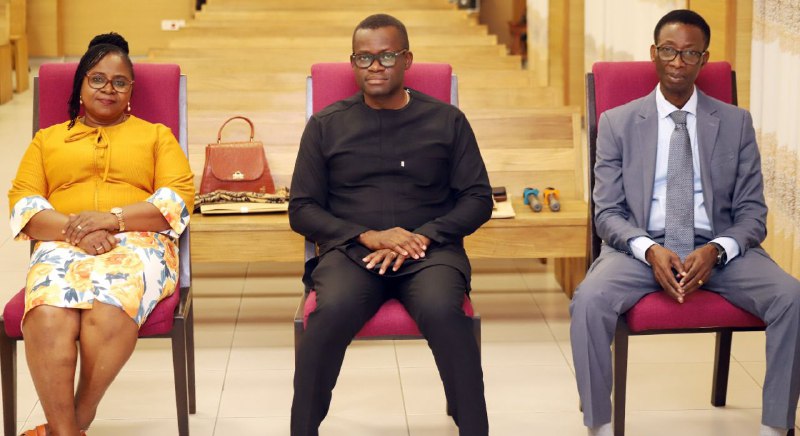
Angèle Azon Kouanou rejoint l'équipe de visite médicale
Le médecin Angèle Azon Kouanou, spécialiste en médecine interne, a rejoint les autres membres de l'équipe médicale devant examiner l'état de santé des candidats à l'élection présidentielle de 2026. Elle a prêté serment ce lundi 03 novembre 2025.
Dans le cadre de la présidentielle de 2026 au Bénin, l'équipe médicale chargée d'examiner l'aptitude physique et mentale des duos de candidats est au grand complet. Le troisième membre, le médecin Angèle Azon Kouanou a prêté serment ce lundi 03 novembre. Elle rejoint ainsi les professeurs Francis Tognon Tchegnonsi (psychiatre) et Léopold Houétondji Codjo (cardiologue) qui avaient prêté serment le 17 octobre dernier.
F. A. A.
Categories: Afrique
Pages
the old site is here


© 2012-2015 Europa Varietas Foundation © 2015-2020 Europa Varietas Association
www.europavarietas.org | info(@)europavarietas(dot)org | Switzerland
This is a GDPR ready site


We are looking for sponsors for the English translation of these books, please contact turkeandras(at)gmail(dot)com